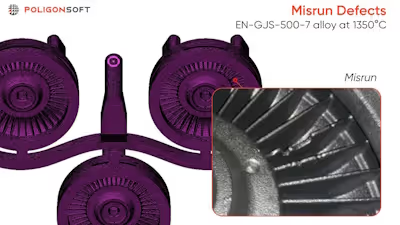
In this example, simulation is used to identify the causes of misruns in a test casting.
Increasing the pouring temperature can help resolve this defect.
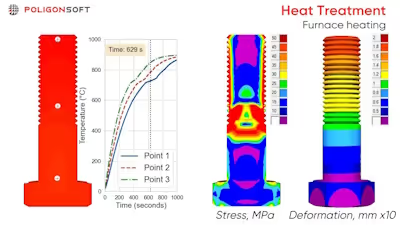
In this study, we compare the quenching of a bolt in different media: water and oil.
The simulation provides phase distribution in the metal and mechanical properties, as well as residual stresses and deformations.
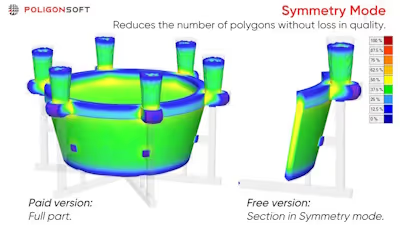
Using the Symmetry tool in the PoligonSoft program allows for a significant reduction in calculation time and the number of polygons in the mesh without any loss of quality.
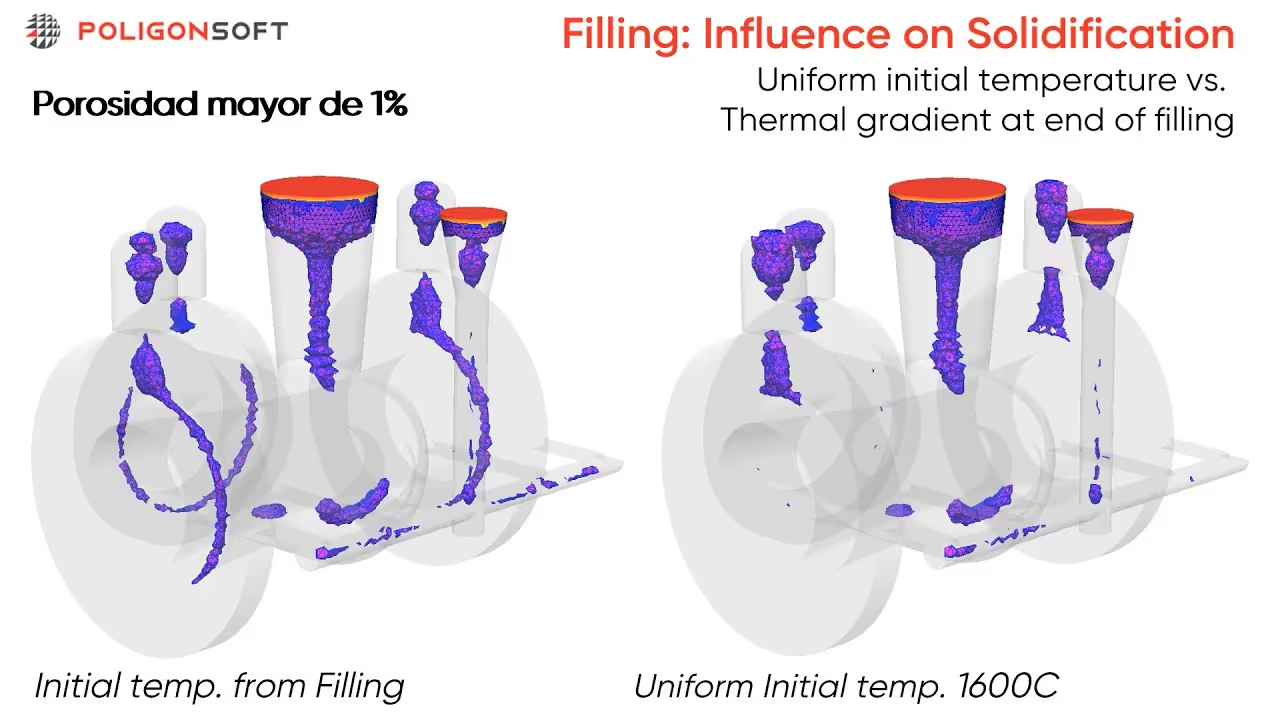
How does the change in the molten metal’s temperature during the pouring process affect the defects that form during solidification?
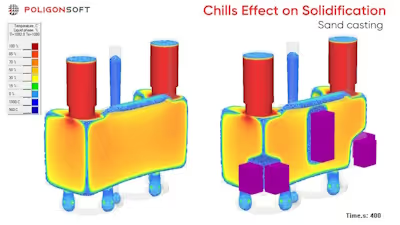
The use of chills is an effective way to eliminate solidification defects in metal casting without modifying the model. The video presents a comparison of the solidification dynamics of the casting with and without chills.
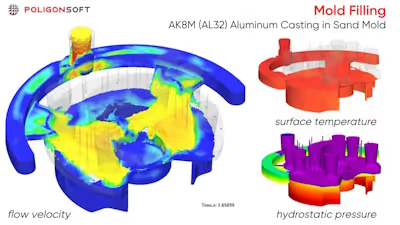
Simulation of the filling dynamics and flow velocities during aluminum casting in a sand mold.
Analysis of the performance of the gating system
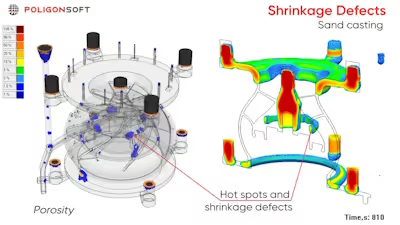
This video analyzes shrinkage defect formation in a complex steel casting. To improve feeding, exothermic risers were added, and iron chills were placed near critical zones to reduce hot spots in areas with limited feeding paths.
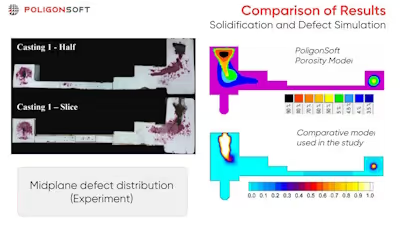
In this video, we compare the results of the solidification simulation of a part in PoligonSoft program with a simulation performed in Magmasoft.
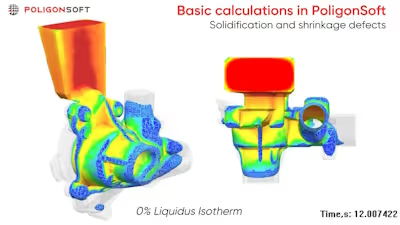
Simulation of aluminum casting in a steel chill mold with a sand core. The basic calculations carried out include filling, solidification, formation of shrinkage defects, stress analysis, and deformation evaluation.
.svg)




.svg)
.svg)
.svg)

.svg)